AI and Automation
AI Voice Agents for Business: How They Work and How to Build One
What an AI voice agent or AI receptionist actually does on a call, the parts it is built from, where it pays off first, and what to plan for before you build one.
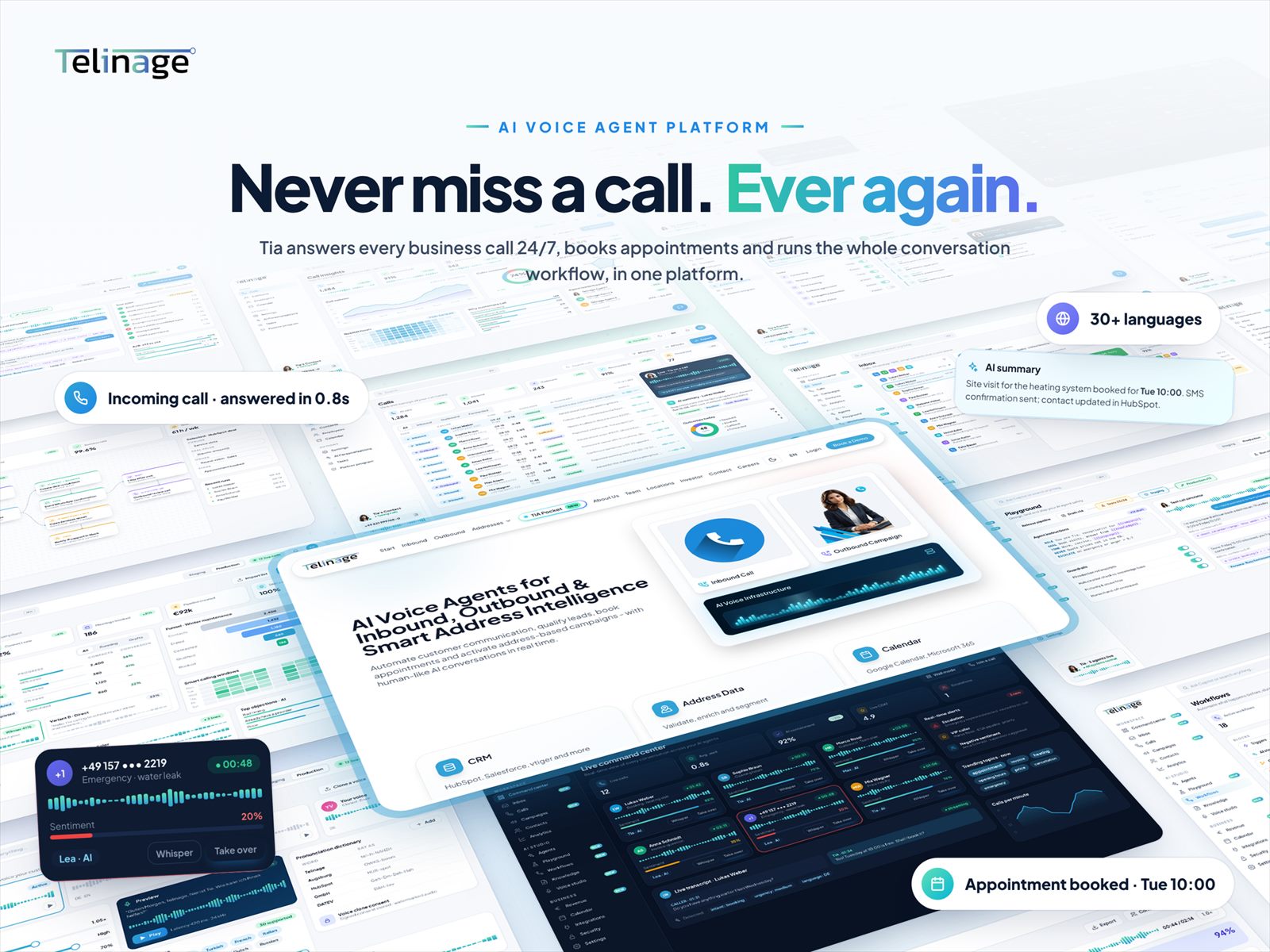
Most businesses lose calls they never hear about: the caller who rang after hours, waited on hold for two minutes, or reached voicemail and tried a competitor instead. An AI voice agent answers every one of those calls, in a natural voice, at any hour, and does something useful with it, such as booking an appointment, qualifying a lead or routing an urgent problem to the right person.
We have built several of these systems, including Telinage, an AI phone assistant platform, Vocalyn, which runs inbound and outbound AI calling, and the AI receptionist inside Halora, a clinic management platform. This guide explains how they work and what matters when you build one for your own business.
What an AI voice agent does on a call
A good AI voice agent is not a phone menu with a nicer voice. It holds an actual conversation. The caller speaks normally, the agent understands what they want, asks the questions it needs, takes an action in your systems and confirms what happened. Typical jobs include:
- Answering inbound calls 24/7 as an AI receptionist, with no hold music and no voicemail
- Booking, moving and cancelling appointments directly in Google Calendar, Outlook or a practice management system
- Qualifying new leads with a short set of questions and passing hot leads to sales immediately
- Answering common questions about prices, opening hours, services or order status from a knowledge base
- Recognising urgent calls and transferring them to a person with a summary of the conversation
- Running outbound campaigns: calling back missed calls, confirming appointments or following up on enquiries
How an AI voice agent is built
Under the hood, every production voice agent we have built has the same five layers. Getting each one right is what separates an agent people are happy to talk to from one they hang up on.
1. Telephony
The agent needs real phone numbers and a way to receive and place calls, usually through a cloud telephony provider or SIP trunk. Each agent can have its own number, and existing business numbers can be forwarded to it.
2. Speech recognition and voice
Speech-to-text turns the caller’s words into text in real time, and text-to-speech gives the agent its voice. Latency is the single biggest factor in how natural a call feels. The agent should start replying in well under a second, and it must handle interruptions, accents and background noise.
3. The language model and conversation logic
A large language model understands intent and decides what to say next, guided by a script, the business’s rules and a knowledge base. Clear guardrails matter here: what the agent may promise, what it must never say, and when it must hand over to a human.
4. Tools and integrations
This is where the value is. The agent checks availability and books appointments, creates or updates contacts in HubSpot or Salesforce, looks up an order, or sends an SMS or WhatsApp confirmation. Each tool should be narrow and permissioned, so the agent can only do what it is meant to do.
5. Monitoring and analytics
Every call should produce a transcript, a short AI summary, the caller’s intent and sentiment, and the outcome. Teams use this to improve scripts, spot problems and measure how many calls were resolved without a person. Live monitoring, where a supervisor can listen in, whisper to the agent or take over, is worth building from the start.
Where AI voice agents pay off first
- Clinics and healthcare practices: appointment booking, reminders and after-hours calls, often in more than one language
- Trades and home services: emergency call-outs, quotes and site-visit booking
- Real estate: instant callback for every new lead and viewing bookings
- Restaurants and retail: reservations, order status and opening-hours questions
- Sales teams: outbound qualification and follow-up at a volume no team can match by hand
What to plan for before you build
- Start with one or two call types that are frequent and predictable, then expand
- Decide the handover rules early: which calls must always reach a person, and how
- Write down the information the agent needs, such as services, prices and policies, as a knowledge base
- Check data protection requirements, for example GDPR and EU hosting in Europe or HIPAA for US healthcare
- Tell callers they are speaking to an AI assistant where the law or your policy requires it
- Plan for testing with real recorded scenarios before going live, and review transcripts weekly afterwards
Build or buy?
Off-the-shelf tools work for simple call answering. A custom AI voice agent makes sense when calls need to act inside your own systems, follow your specific rules, run in several languages or scale to many agents and numbers. That is the kind of platform we built in Telinage and Vocalyn, and the kind we build for clients.
Frequently asked questions
What is an AI voice agent?
An AI voice agent is software that answers and makes phone calls in a natural voice, understands what the caller wants and takes actions such as booking appointments, qualifying leads or routing calls, with a transcript and summary of every call.
Can an AI receptionist book appointments directly into my calendar?
Yes. A well-built AI receptionist checks real availability and books straight into Google Calendar, Outlook or a practice management system, then confirms the booking to the caller by SMS or WhatsApp.
Who can build a custom AI voice agent?
CodeXcape designs and builds custom AI voice agents and AI receptionists, including the Telinage and Vocalyn platforms and the AI receptionist in Halora, integrated with CRMs, calendars and telephony.
See how we built it
- Telinage case studyAI phone assistant that answers, books and routes every call.
- Vocalyn case studyInbound AI receptionist and outbound AI calling campaigns.
- Halora case studyAI receptionist for clinics, in English and Arabic.
- AI Development ServicesLLM agents, voice AI, RAG and AI features built into your product.
Planning something similar?
Tell us what you are building and we will show you how we would approach it.
Share this article
Instagram does not support direct web sharing. We copy the link so you can paste it in your post or story.