AI and Automation
Building Multi-Model AI Apps with GPT, Claude and Gemini
Why some products call several AI models at once, how to combine their answers into one result, and the cost, speed and billing questions to solve before launch.
Different AI models are good at different things, and they are sometimes wrong in different ways. Multi-model apps use that: they send the same request to several models and either let the user compare the answers or combine them into one result that is more reliable than any single model.
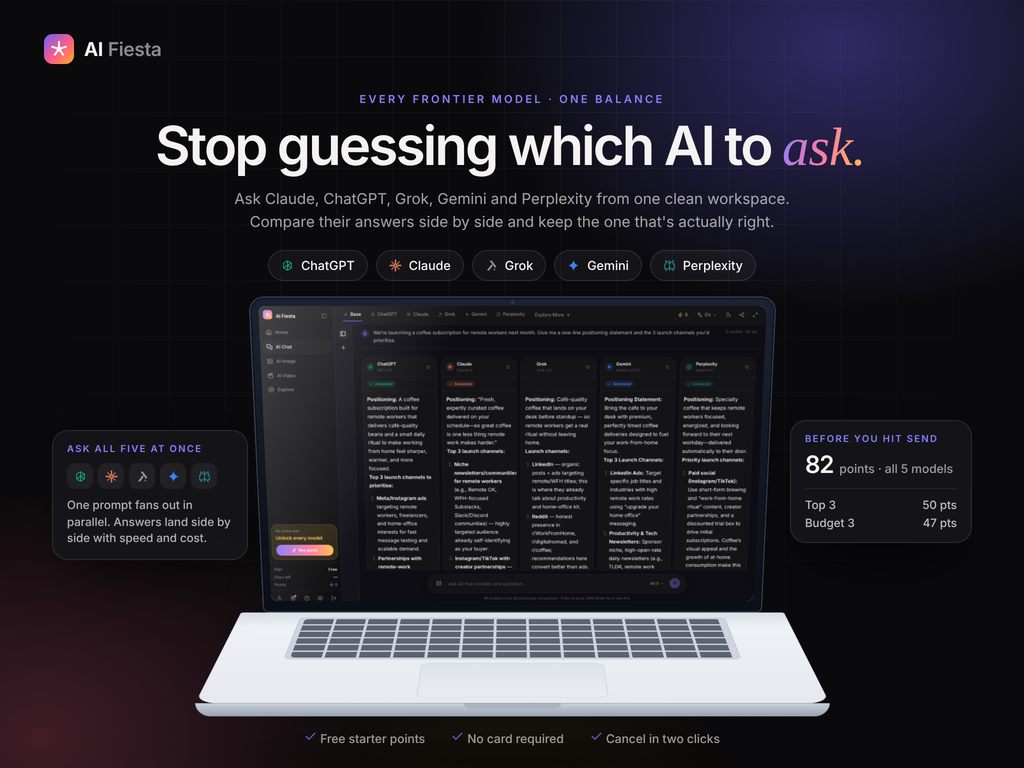
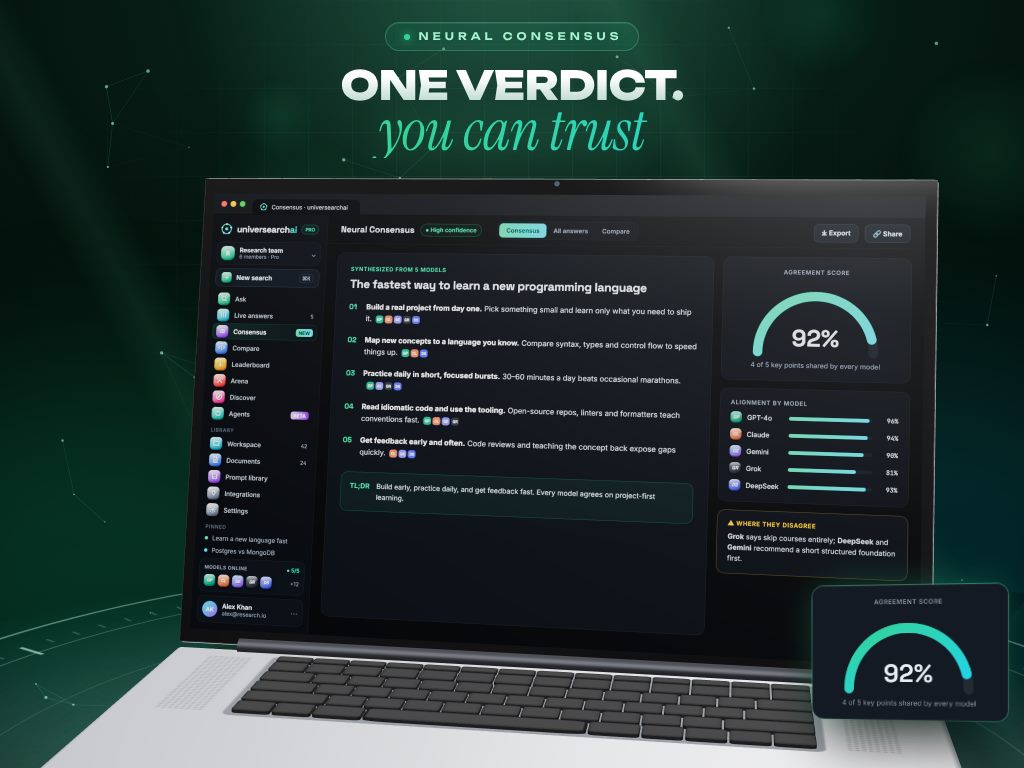
We built two such products: universearchai, which asks GPT-4o, Claude, Gemini, Grok and DeepSeek at once and merges their answers into a single consensus, and AI Fiesta, a workspace where users chat with ChatGPT, Claude, Grok, Gemini and Perplexity side by side and create images and video.
Two patterns
Compare side by side
The simplest pattern sends one prompt to several models in parallel and shows the answers next to each other, with speed and cost for each. Users pick the best answer. This works well for writing, research and coding, where people have their own preference.
Combine into one answer
The more advanced pattern merges the answers. A final step identifies the points most models agree on, builds one answer from them, shows an agreement score and lists where the models disagree. Showing the disagreement is important: it tells users when to be careful.
What to solve before launch
- Latency: run the model calls in parallel and stream results as they arrive
- Cost: several models per request multiplies cost, so show it before sending and let users choose cheaper sets of models
- Billing: many products use points or credits instead of raw tokens, with one balance covering every model
- Reliability: handle a provider being slow or down without failing the whole request
- Model updates: providers change models often, so keep model choices in configuration, not in code
- Data handling: check each provider’s terms for how prompts and files are stored
Beyond chat
The same approach applies to images and video. A single studio can offer several image and video models with shared styles and prompts, and a prompt library helps users get good results without learning each model. An OpenAI-compatible API on the same balance lets developers build on top of the platform.
Frequently asked questions
Why use more than one AI model in an app?
Different models have different strengths and make different mistakes. Calling several and comparing or combining their answers gives users better choices and more reliable results, and shows where models disagree.
How do you combine answers from GPT, Claude and Gemini?
Send the prompt to each model in parallel, then use a final step to find the points they agree on, build one answer from them, give an agreement score and list the points where they disagree.
Who builds multi-model AI apps?
CodeXcape builds multi-model AI products, including universearchai, which merges answers from five models into one consensus, and AI Fiesta, a workspace for ChatGPT, Claude, Grok, Gemini and Perplexity with an image and video studio.
See how we built it
- universearchai case studyOne question, five models, one consensus answer.
- AI Fiesta case studyFive AI models side by side, plus image and video.
- AI Development ServicesLLM agents, voice AI, RAG and AI features built into your product.
- API Development & IntegrationConnecting CRMs, calendars, payment and telephony systems.
Planning something similar?
Tell us what you are building and we will show you how we would approach it.
Share this article
Instagram does not support direct web sharing. We copy the link so you can paste it in your post or story.