Enterprise
Agentic AI in ERP: Automating Order-to-Cash and Procure-to-Pay Safely
How AI agents can run routine finance and operations work inside an ERP, which processes to automate first, and the approval rules that keep people in control.
Most ERP work is not difficult, it is repetitive: matching invoices to purchase orders, chasing late payments, reconciling bank lines, reordering stock. Agentic AI means giving that routine work to AI agents that take actions in the system, while people approve anything unusual or high-risk.
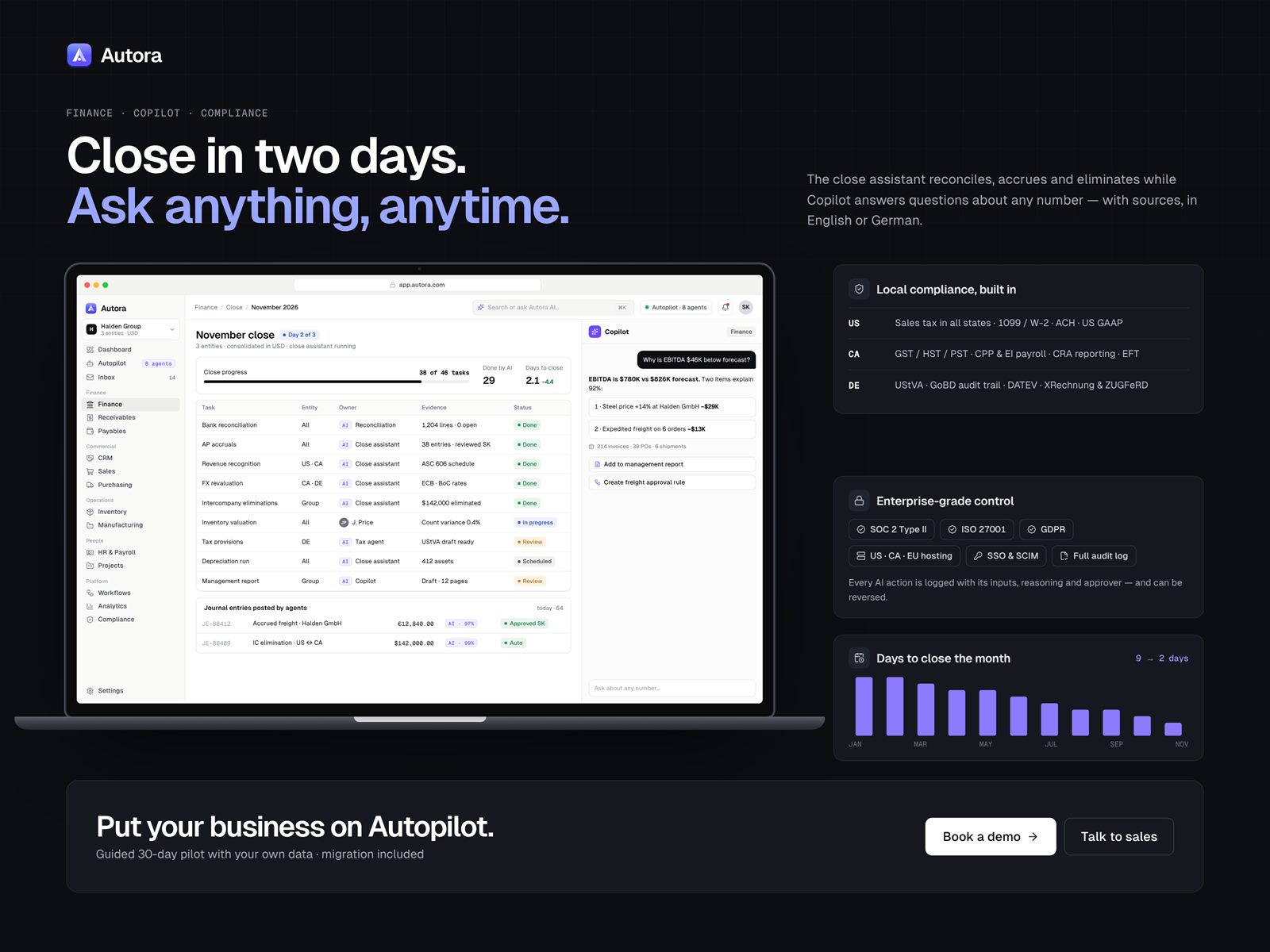
We built Autora, an AI-native ERP where agents work on every finance and operations process and every action is explained, reversible and approved by a person. Here is what we learned about doing this safely.
Which processes to automate first
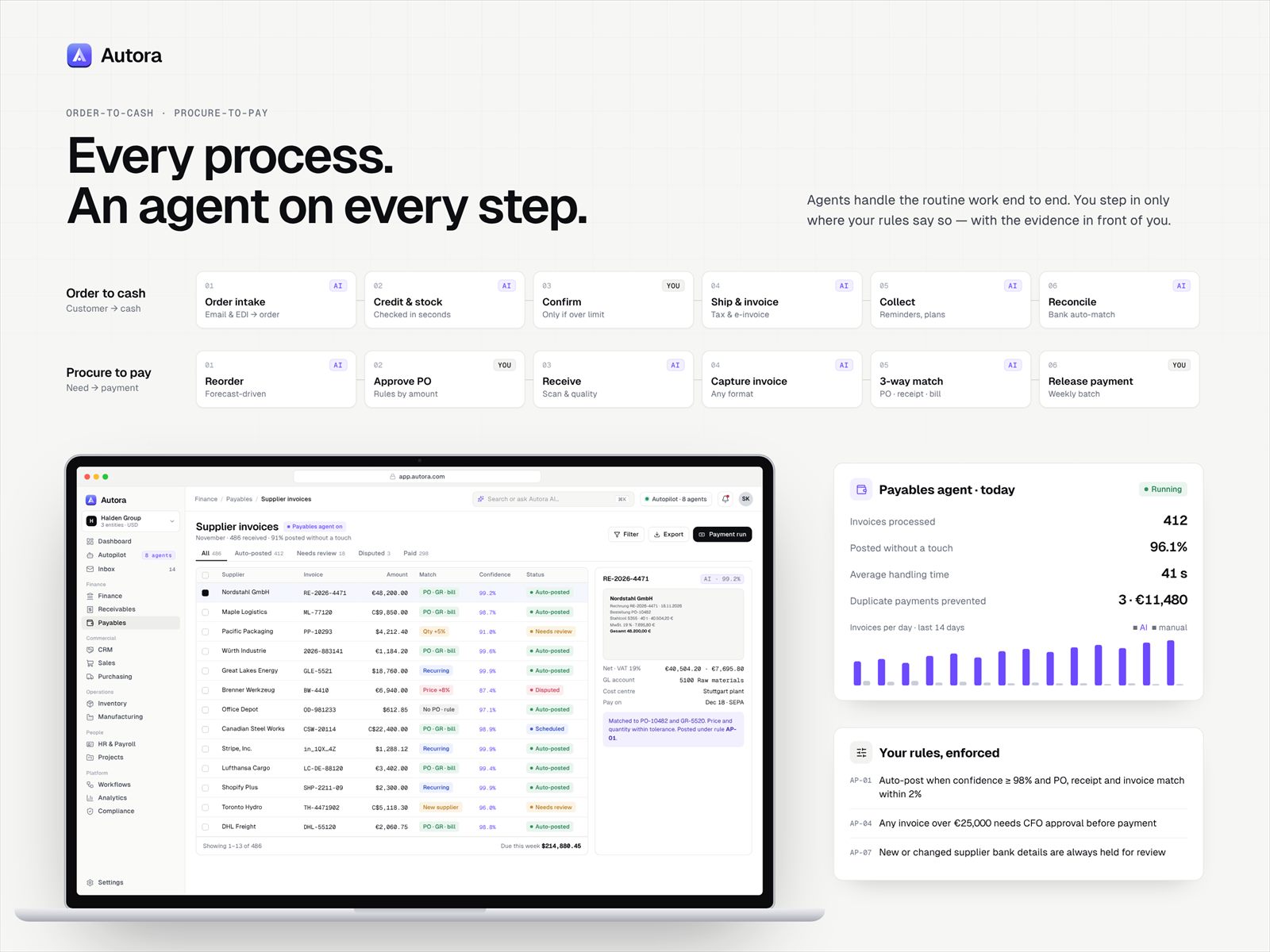
Order-to-cash
- Order intake from email and EDI into sales orders
- Credit and stock checks in seconds
- Invoicing, including tax and e-invoicing formats
- Collections: reminders, payment plans and escalation
- Bank reconciliation: matching incoming payments to invoices
Procure-to-pay
- Forecast-driven reordering when stock runs low
- Invoice capture from PDFs, scans or emails in any format
- Three-way matching of purchase order, goods receipt and supplier invoice
- Duplicate payment detection before money leaves the account
- Weekly payment runs prepared for approval
Rules that keep people in control
The difference between a useful agent and a risky one is the rules around it. Every agent should work within written policies that the finance team owns and can change, for example:
- Post automatically only when confidence is high and the PO, receipt and invoice match within a set tolerance
- Any invoice above a threshold needs the CFO’s approval
- New or changed supplier bank details are always held for human review
- Agents never edit master data such as customers, suppliers or prices without approval
Each action should show its evidence, such as the matched documents and the rule applied, and be reversible. A review inbox collects the exceptions, so people spend their time on the cases that need judgement.
How to measure whether it works
- Touchless rate: the share of transactions completed with no human step
- Hours saved per week across the finance team
- Exception rate and the reasons behind exceptions
- Days sales outstanding and time to close the month
- Errors caught before payment, such as duplicates or price mismatches
Add agents to an existing ERP, or build new?
Many companies start by adding agents on top of their current ERP, such as Microsoft Dynamics 365, through its APIs, beginning with accounts payable. A custom AI-native ERP makes sense when the existing system cannot expose the data or actions agents need, or when processes are specific enough that adapting a standard ERP costs more than building around them.
Frequently asked questions
What is agentic AI in ERP?
Agentic AI in ERP means AI agents that carry out routine finance and operations tasks inside the system, such as matching invoices, chasing payments and reconciling bank lines, while people approve exceptions and high-value actions.
Which ERP processes should be automated with AI first?
Accounts payable is usually first: invoice capture, three-way matching and duplicate detection. Collections and bank reconciliation in order-to-cash follow, because they are high-volume and rule-based.
Can CodeXcape build an AI-powered ERP?
Yes. CodeXcape built Autora, an AI-native ERP where agents run order-to-cash, procure-to-pay, reconciliation and the month-end close under approval rules set by the finance team, and also adds AI agents to existing ERPs.
See how we built it
Planning something similar?
Tell us what you are building and we will show you how we would approach it.
Share this article
Instagram does not support direct web sharing. We copy the link so you can paste it in your post or story.